

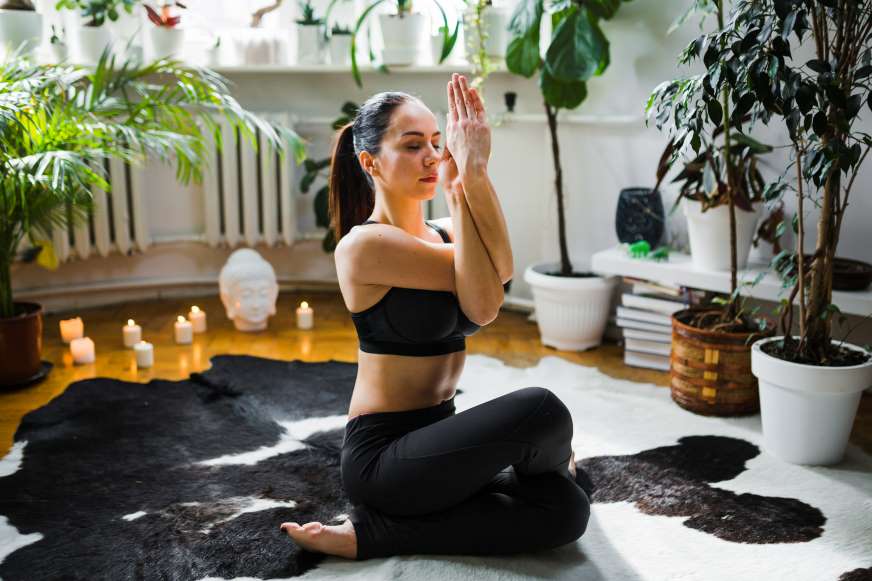
Practising yoga at home sounds simple, but in Singapore, HDB living comes with real constraints. Limited space, shared walls, warm temperatures, and household activity all affect how comfortable and sustainable a home yoga routine feels. Many people attend classes regularly but still want a safe, functional space at home for short practices, mobility work, or recovery days.
Even if you practise mainly at a yoga studio near me, having a dedicated home yoga corner helps reinforce consistency. The goal is not to recreate a studio or design an aesthetic room. It is to create a practical, safe, and comfortable setup that works within real HDB conditions.
This article explains how to design a yoga corner that supports movement, breathing, and focus, while managing airflow, flooring safety, and noise considerations in a typical Singapore flat.
Why a Dedicated Yoga Corner Matters in HDB Homes
In compact homes, yoga often gets pushed into whatever space is available at the moment. This leads to rushed setups, distractions, and safety compromises.
A dedicated corner helps by:
-
Reducing friction to start practising
-
Improving posture and alignment through consistent positioning
-
Creating a mental cue for movement and relaxation
-
Preventing skipped sessions due to inconvenience
Even a small, clearly defined area can support meaningful practice when set up thoughtfully.
Choosing the Right Spot in Your Flat
Look for Consistent Space and Clearance
You do not need a full room, but you do need enough clearance to move safely.
Aim for:
-
Space to extend arms fully in all directions
-
Enough length for a mat without hitting walls
-
Clearance for standing poses without fear of knocking objects
Living rooms often work best, but bedrooms can also be suitable if furniture layout allows.
Avoid High-Traffic Areas
Choose a corner that is not constantly walked through. Interruptions break focus and increase the risk of slipping or stepping on props.
If possible, avoid areas near:
-
Main walkways
-
Kitchen entrances
-
Television or gaming setups
Consistency matters more than size.
Flooring Safety in HDB Flats
Flooring is one of the most important factors in a home yoga setup.
Understanding Common HDB Floor Types
Many HDB flats use tiles, vinyl, or laminate flooring. These surfaces can become slippery, especially with sweat or humidity.
Potential issues include:
-
Mat sliding during transitions
-
Reduced grip in standing poses
-
Increased joint impact on hard surfaces
Creating an Anti-Slip Base
To improve safety:
-
Use a non-slip yoga mat with good grip
-
Place a thin rubber underlay beneath the mat if needed
-
Avoid practising directly on bare tiles
If the floor feels too hard, add a thin foam mat or rug underneath for joint comfort, ensuring it does not shift.
Managing Airflow and Heat Comfort
Singapore’s climate affects how the body responds during movement. Poor airflow leads to fatigue and discomfort, especially during longer practices.
Positioning for Natural Ventilation
If possible, place your yoga corner near:
-
A window with adjustable opening
-
A balcony door that allows cross ventilation
Even slight airflow improves comfort significantly.
Fan Placement Matters
Ceiling or standing fans can help, but placement is important.
Best practices include:
-
Indirect airflow rather than blowing directly on the face
-
Fan positioned to circulate air across the room
-
Avoiding strong drafts during long holds
Comfortable airflow supports steady breathing and focus.
Noise Control for Neighbour-Friendly Practice
Noise is a real concern in HDB living, especially during early morning or late evening practice.
Reducing Impact Noise
Heavy footfalls can travel easily through floors. To minimise disturbance:
-
Use a mat with good cushioning
-
Move with control rather than momentum
-
Avoid jumping or stomping movements
Yoga styles that emphasise slow transitions are more neighbour-friendly.
Managing Prop and Equipment Sounds
Props can create noise if handled carelessly.
Simple adjustments help:
-
Place props gently on the mat
-
Avoid dragging blocks across the floor
-
Store props neatly to prevent accidental noise
Mindful movement supports both practice quality and neighbour comfort.
Lighting for Focus and Eye Comfort
Lighting influences mood and nervous system response.
Natural Light During Daytime Practice
Daylight supports alertness and body awareness. Position your mat to benefit from natural light without glare.
Avoid:
-
Direct sunlight on the eyes
-
Reflections from mirrors or glossy surfaces
Soft Lighting for Evening Practice
For evening sessions:
-
Use warm, soft lighting
-
Avoid bright overhead lights if possible
-
Consider a small lamp for gentle illumination
This supports relaxation and smoother transitions into rest.
Storage Solutions for Small Spaces
Clutter disrupts focus and creates safety hazards. Simple storage keeps the yoga corner functional.
Practical ideas include:
-
Vertical storage for mats against the wall
-
Small baskets for blocks and straps
-
Hooks or shelves that keep props off the floor
Keeping the area tidy makes it easier to start practising without preparation stress.
Creating Mental Separation From Daily Activities
A yoga corner is not just physical, it is psychological.
Ways to reinforce separation include:
-
Facing a neutral wall rather than a screen
-
Keeping work items out of sight
-
Using the same orientation for each practice
Consistency trains the mind to shift into movement mode more easily.
Balancing Home Practice With Studio Classes
Home practice supports studio learning, but it should not replace professional guidance entirely.
At home, you can focus on:
-
Gentle mobility
-
Breath awareness
-
Recovery and stretching
Studio classes provide:
-
Alignment feedback
-
Structured progression
-
Social motivation
Together, they create a balanced routine.
Safety Considerations for Solo Practice
Without an instructor present, safety becomes even more important.
Keep these principles in mind:
-
Avoid pushing into pain
-
Move slowly into new poses
-
Skip poses that feel unstable in your space
-
Keep a phone nearby in case of emergency
Listening to your body is essential.
Adapting Practice for Shared Living
Many people share HDB flats with family members. Flexibility and communication help maintain harmony.
Consider:
-
Practising during quieter household periods
-
Informing others of your practice time
-
Choosing shorter sessions when space is limited
Adaptability supports consistency without conflict.
Making the Space Feel Inviting, Not Decorative
Your yoga corner does not need to look like a studio. It needs to feel welcoming and functional.
Small touches can help:
-
A clean mat
-
A folded towel
-
One or two props within reach
Avoid over-decorating, which can become distracting.
How Studio Learning Translates to Home Practice
Techniques learned in class often become clearer at home.
Home practice helps reinforce:
-
Breath control
-
Postural awareness
-
Transition smoothness
This strengthens the value of both environments.
One studio that encourages thoughtful integration between studio and home practice is Yoga Edition, where classes emphasise practical movement awareness that carries over into daily life.
FAQ: Real-Life Questions About Home Yoga in HDB Flats
Q: How much space do I realistically need for a home yoga corner?
A: You need enough space to fully extend your arms and lie down on a mat. Even a small cleared corner can work if it allows safe movement.
Q: What if my floor is slippery even with a mat?
A: Use a non-slip underlay beneath your mat or practise barefoot with a mat designed for humid conditions.
Q: Can I practise yoga early in the morning without disturbing neighbours?
A: Yes, if you choose low-impact movements, use cushioning, and move with control. Avoid jumping or fast transitions.
Q: Is it okay to practise yoga in an air-conditioned room?
A: Yes, as long as the temperature is comfortable and not too cold. Avoid strong airflow directly on the body during long holds.
Q: How do I stay consistent with home practice?
A: Keep the setup simple, practise at the same time of day when possible, and treat the space as non-negotiable time for yourself.
A well-planned yoga corner turns limited HDB space into a reliable support for movement and wellbeing. With thoughtful setup and realistic expectations, home practice becomes a valuable extension of your studio experience rather than a compromise.