

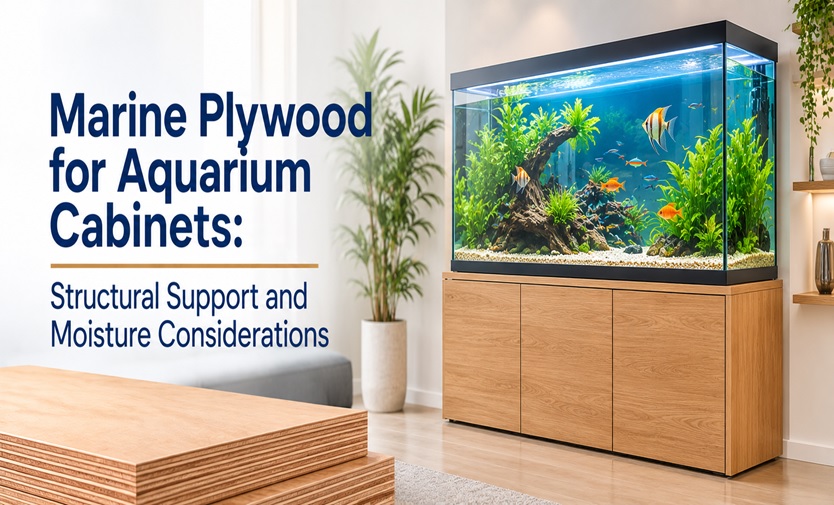
Aquarium cabinets should ensure the safe and timely transportation of all the water and equipment inside the aquarium. Nevertheless, unlike conventional cabinets, aquarium cabinets have to bear loads throughout the entire period of time they are used, experiencing various moisture issues like leaks, condensation, and splashes of water.
1. Evaluation of Load-Bearing Capacity of Aquarium Cabinets
An aquarium should be perceived as a constant-load product instead of a temporary loading one. The cabinet should be capable of carrying the total weight of the aquarium, water, substrate, rocks, etc.
The necessary support depends on the tank size and structural design of the aquarium. The thickness of plywood is not the only criterion to determine the strength of the aquarium cabinet; it is important to check the frame design, spacing of supports, andjoint’ structure.
When choosing the materials for the aquarium cabinet you need to consider:
- Dimensions of the aquarium and total weight of the filled tank
- Type and distance between structural supports
- Weight of substrate, stones and equipment
- Level and stability of the floor under the cabinet
It is always advisable to follow the instructions given by the producer of the aquarium regarding the aquarium stand.
Marine plywood is manufactured with water-resistant glue and can be used for suitable cabinet components where high humidity and water contact is possible.
However, the water-resistant properties of marine-grade plywood do not help to make the aquarium cabinet waterproof.
Water is able to seep through numerous spots such as seams, edges, drilled openings and unprotected surfaces. The effectiveness of the material used in making cabinets is determined by several aspects, namely quality of production, protective measures, installation technique, and maintenance practiced.
2. Selecting Marine Plywood for Parts of the Cabinet
Parts of cabinets serve different purposes and thus have unique features. The side and front panels form the shell from which the cabinet for aquariums is made,e while the top and the frame must be strong and able to support the weight of the aquarium.
Although the need of using marine plywood sheets for each of the cabinet parts is determined by the features of each part, selecting marine plywood must take several factors into consideration:
- Top panel: it must provide a level and suitable surface for the aquarium;
- Side panels: they must be in accordance with the design of the cabinet and be stable enough when needed;
- Storage boxes: they should hold equipment without affecting the sturdiness of the cabinet;
- Doors and decoration panels: they must be suitable for the design of the cabinet and protected from water splashes. Selecting materials must depend on the general design of the cabinet and load requirements rather than moisture resistance.
3. How to Avoid Damages Caused by Moisture from Aquariums
Moisture comes inside the cabinet accidentally during feeding or cleaning ofthe aquarium, around the equipment, filter maintenance or due to leaking water. In case moisture accumulates near the panel, it will lead to damage to the surface or even joints. In the case of plywood for moisture-exposed applications, it is necessary to seal the cut edges of boards and protect boards from danger. There should be correct and proper treatment for both the milling surfaces and also for the connection surfaces in the case of the cabinet design, it is important to prevent the penetration of moisture into the horizontally placed cabinet surfaces.
The prevention can be achieved through the following measures to control moisture:
- Seal edges of cutouts and drilled connections.
- Remove quickly spilled water and never let it stay long unattended.
- Provide protection to equipment where necessary.
- Make plumbing connections easy to check.
- Repair damage on surfaces before moisture reaches the inside of the plywood.
These proposals help control the process of moisture in the cabinet; however, they do not remove the need to constantly check for leaks.
4. The Cabinet Before Installing an Aquarium
Before assembling the cabinet, it is necessary to investigate the plywood boards and make sure that they are free from problems such as visible cracks, defective layers, distortions or delaminations. It should also be checked whether the plywood dowel meets the specifications of the project.
While installing the cabinet:
- It should be ensured that the construction of the cabinet is made of reliable screws and is designed properly.
- The base of the construction should be stable and flat.
- The load-bearing structure of the cabinet must retain its shape under the pressure of a filled aquarium.
- Follow the recommendations provided by the manufacturer of the aquarium regarding stability.
Cabinets have to be checked for any movement or mistakes in assembly.
Royale Touche marine plywood can be considered as suitable material when making cabinets for aquariums. The material must undergo an assessment that should consider factors such as actual load, moisture conditions, and construction process.
5. Servicing the Cabinet after Being Installed
Regular inspections should help detect and eliminate problems at an early stage. It is necessary to pay attention to all places where water drains in, for example, oil leaks.
Look for:
- Cabinet damage due to moisture penetration.
- Poor quality of coatings applied to the surfaces.
- Loose fasteners.
- Movement of the connected elements of the structure.
- Leaks from pipes and other connecting elements.
The applied proposals should help to eliminate defects of the cabinet but should not lessen the need for continuous monitoring of leaks in it.
Conclusion
Although marine plywood can be used for making aquariums, it will not replace the necessity for constructing the stable structure itself that would hold the aquarium on it safely. The aquarium’s weight, construction of the cabinet, and load distribution will have an influence on the performance of the cabinet and its accuracy.